
Spices Origins: Zaatar
Zaatar: The Soulful Spice of the Levant
More than just a staple in the pantry, Zaatar is a fragrant, tangy, and deeply earthy blend that acts as a symbol of identity across the Levant. It is woven into the daily rituals and communal tables of Lebanon, Palestine, Jordan, and Syria, bringing a sense of history and meaning to every dish it touches. For many, it is not just a flavour; it is a connection to ancestral memory and the land itself.
Understanding the Blend
The word Zaatar actually refers to two things: the wild herb itself, which is a relative of thyme and oregano, and the artisanal blend made from it. While every village and family might have their own closely guarded secret recipe, a classic blend almost always relies on four essential pillars.
It starts with the dried Zaatar herb, which provides that foundational woodiness. Then comes the sumac, which offers a bright, citrus-like tang that cuts through richer flavours. Toasted sesame seeds add a nutty richness and a slight crunch, while a touch of sea salt brings all the elements into focus. Some regional variations might include hints of cumin or fennel for added warmth, but the goal is always a perfect balance of savory, citrusy, and nutty notes.
From Ancient Healing to the Modern Kitchen
The roots of Zaatar stretch back centuries, appearing in ancient texts and even in the history of Ancient Egypt. Long before it was a culinary superstar, it was revered for its medicinal properties. In regional folklore, it was often said that Zaatar could sharpen the mind and fortify the body, which is why it remains a breakfast essential for students and families today.
In the modern kitchen, Zaatar has evolved into one of the most adaptable seasonings in the world. While it is most famous as the topping for Manakish—those irresistible Middle Eastern flatbreads—it is just as comfortable in contemporary cooking.
How to Use Zaatar Like an Expert
If you are new to this spice, the most traditional way to enjoy it is also the simplest: dip a piece of fresh bread into high-quality olive oil, then into a bowl of Zaatar. However, its versatility goes far beyond that.
It is a fantastic companion for creamy elements like Labneh or Hummus, providing a sharp contrast to the velvet-smooth textures. If you are roasting vegetables like carrots or cauliflower, a generous dusting of Zaatar before they go into the oven will create a beautifully aromatic crust. It also works brilliantly as a dry rub for grilled chicken or lamb, and in more modern settings, it has become a go-to topping for avocado toast or even gourmet popcorn.
A Connection to Heritage
Beyond the kitchen, Zaatar represents resilience and preservation. In many Levantine cultures, the act of foraging wild herbs and hand-blending spices is a tradition passed down through generations. It is a food of comfort and pride, reminding us that the simplest ingredients often carry the deepest stories.
Every pinch of this blend carries centuries of flavour and a direct link to the sun-drenched hills of the Mediterranean coast.

The Pinch Cajun Collection


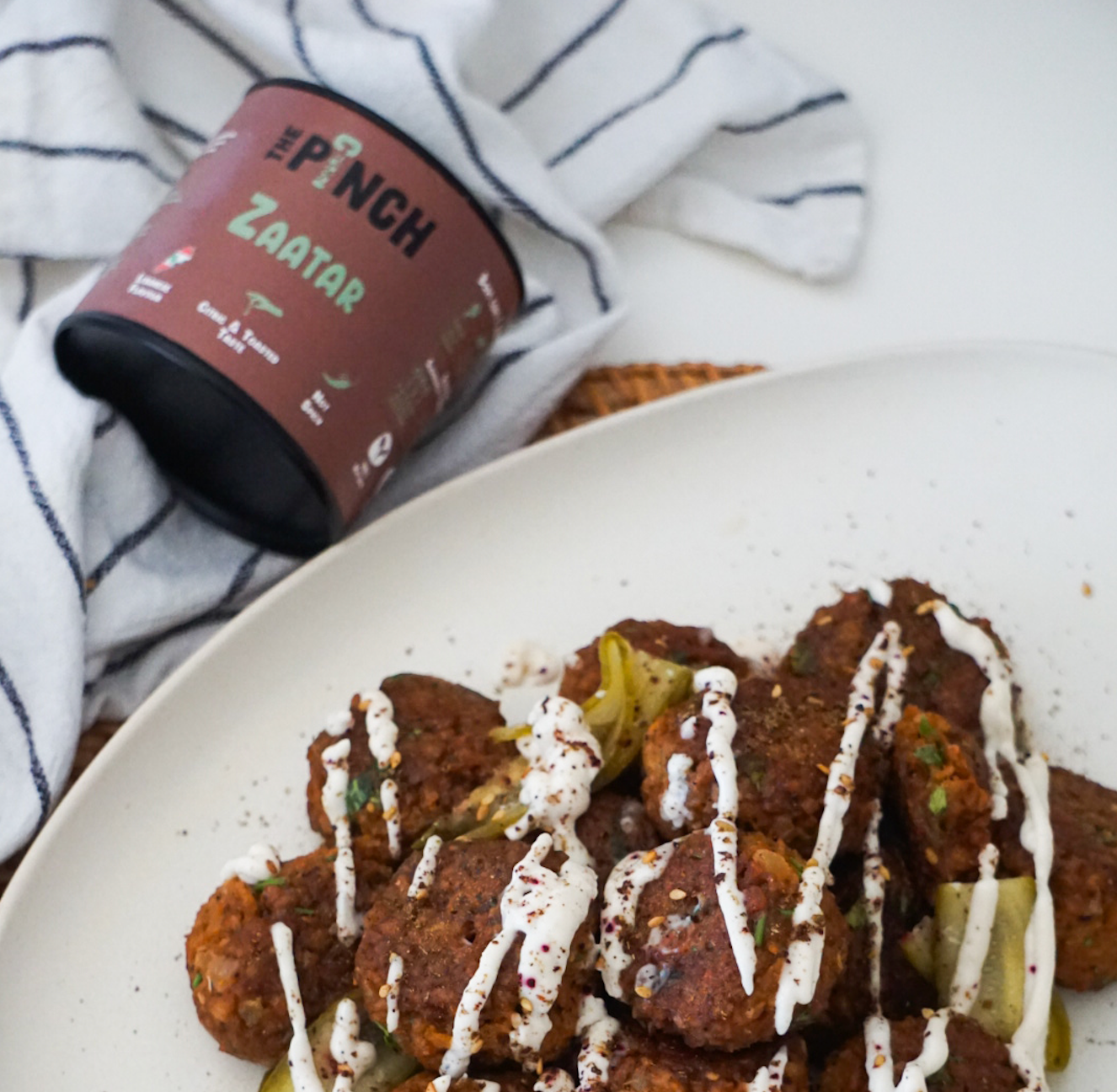
👨🏻🍳 The Pinch Chef Inspirations 👨🏻🍳
Zaatar Veggie Meatballs
Taste the vibrant, earthy flavor of The Pinch Zaatar — and imagine what else you could create with it.
- Choosing a selection results in a full page refresh.

